Silverleaf whitefly
21/12/2025
Silverleaf whitefly (SLW), also known as poinsettia or sweet potato whitefly, is widespread in Western Australia and Queensland. A native species, which isn’t a known pest, and two introduced biotypes occur. Both biotypes arrived in Australia already resistant to some insecticides. Biotype B can develop insecticide resistance rapidly and Biotype Q, only recently discovered in Queensland, is highly resistant to insecticides. Biotype B, causes significant crop physiological responses such as silvering while Biotype Q doesn’t. SLW (Biotype B) is a serious pest in cotton and vegetable crops including tomatoes, sweet potatoes, brassicas, beans and eggplants. Both Biotypes are efficient vectors of gemini viruses including tomato yellow leaf curl virus (TYLCV).
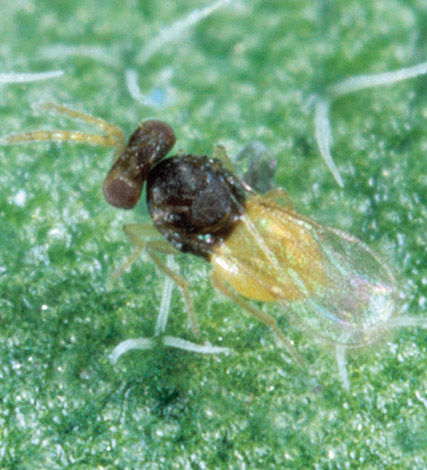
Description
SLW are small (0.8-1.2 mm) sap sucking pests and adults are yellow with white powdery wings. Eggs are laid on the underside of leaves and they hatch as crawlers within 8-10 days. The crawlers move to find suitable food where they remain until they pupate. In warmer climates such as Queensland, 8-12 generations can occur in one year.
Feeding damage from high infestations causes poor growth, leaf or fruit deformities, defoliation, reduced yields and in severe cases, plant death. Saliva injected by SLW (Biotype B) causes leaf silvering, this is common in squash, zucchinis and pumpkins, while cucurbits and beans develop fruit discolouration. Broccoli affected by SLW develops pale stalks known as ‘white streaking disorder’ and tomatoes ripen unevenly with the skin developing green, yellow or orange streaks.
SLW secretes honeydew (a sugary sap) onto fruit surfaces, producing a sooty mould which covers the leaves and in severe cases, photosynthesis and the marketability of fruit is reduced. In cotton honeydew can contaminate the lint causing issues with ginning and milling.
Control
Sourcing pest-free seedlings, in addition to controlling volunteer host plants and weeds in and around fields or greenhouses will assist in preventing SLW numbers from building. Crops should be monitored regularly through visual checks of the underside of leaves or the use of sticky traps, so appropriate control measures can be implemented.
SLW biotype B is prone to rapidly developing resistance to insecticides, consequently applications should only be made when maximum thresholds are reached and insecticides with different modes of action should be rotated.
Several predators feed on SLW which include big-eyed bugs, lacewing larvae, ladybird beetles and pararasitoid wasps (Eretmocerus hayati and Encarsia spp.). Movento® is soft on beneficial insects and is registered for control of SLW (Biotype B) in beans, peas (green peas, including snow peas and sugar snap peas), brassicas, leafy brassica vegetables, cucurbits, eggplants, peppers (capsicum and chilli), tomatoes, potatoes and sweet potatoes.
References
Cotton Info (2018), ‘Managing Silverleaf Whitefly in Australian Cotton’, Cotton Info Fact Sheet, https://www.cottoninfo.com.au/sites/default/files/documents/SLW%20booklet%20-%20May%202018.pdf
Department of Agriculture and Fisheries (DAF) (2017), ‘Silverleaf Whitefly’, Queensland Government DAF, https://www.daf.qld.gov.au/business-priorities/agriculture/plants/fruit-vegetable/insect-pests/silverleaf-whitefly
McDougall, S (2009) ‘Silverleaf whitefly in vegetables’, Department of Primary Industries (DPI) NSW, Primefact 974, https://www.dpi.nsw.gov.au/__data/assets/pdf_file/0019/312805/Silverleaf-whitefly-in-vegetables.pdf
Queensland Government (2018), ‘Silverleaf whitefly’, Business Queensland, https://www.business.qld.gov.au/industries/farms-fishing-forestry/agriculture/crop-growing/pests-field-crops/silverleaf-whitefly