Brome grass / great brome
21/12/2025
Brome grass and wild oats have been rated the two most competitive grass weeds in wheat. Western Australian research has shown that brome grass at a density of 100 plants/m2 can reduce wheat yields by 30%.
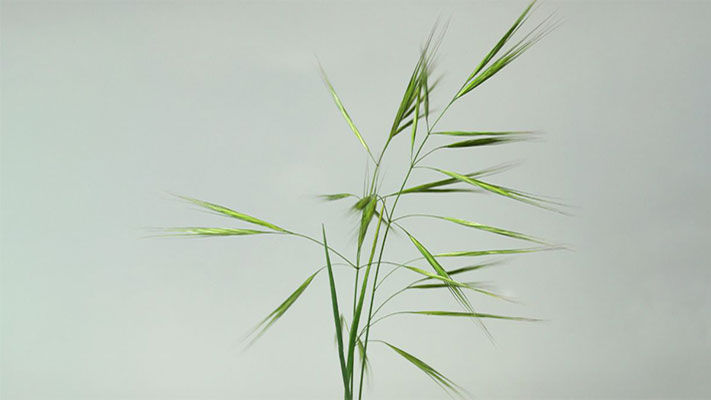
Description
Brome grass seedlings are easily mistaken for wild oat seedlings. They have dull, hairy leaves, occasionally with red-purple stripes following the veins of the leaf blade.
Mature plants have rough leaves about 10 mm wide and a tubular leaf sheath. Brome grass seeds – shed in large numbers before crop harvest – are long and sharp.
Control
Brome grass does particularly well in no-till crops, where seeds do not germinate until sowing. Plants may then emerge in large numbers, so the pre-emergence suppression of brome grass that Sakura provides can be very important./p>
Brome grass is more tolerant of phosphorus deficiency and more responsive to nitrogen than wheat, so applying nitrogen to a crop can exacerbate a brome grass problem.
Brome grass does particularly well in no-till crops, where seeds do not germinate until sowing. Plants may then emerge in large numbers, so the pre-emergence suppression of brome grass that Sakura provides can be very important.
Post-emergent products like Atlantis – if they remain effective – should be applied when the weeds have 2 to 6 leaves.