Aclonifen herbicide helping win the numbers game in cropping programs - Eastern Version
11/03/2026
“It’s a numbers game!” This catch cry is often heard for annual ryegrass control, including of herbicide-resistant populations, putting the focus on reducing the weed seedbank in cropping programs. Long-term trials are showing it’s important to have the ideal chemistry combination to maximise reduction of weed numbers.
Bayer Technical Solutions Agronomists have continued to undertake trials with the company’s pre-emergent and early post-emergent (EPE) herbicide, Mateno® Complete. These trials, similar to independent trials, have confirmed that its EPE application is the industry benchmark for annual ryegrass control.
Mateno Complete contains aclonifen, pyroxasulfone and diflufenican, and its use EPE, following an effective pre-emergent herbicide, helps achieve improved and extended control across the entire soil surface, including weeds in the furrow.
“There are various strategies that can help manage your weed seedbank, including harvest weed seed control, good crop competition, optimised spray application and the use of knockdown herbicides pre-plant. It’s critical to always keep the weed seedbank as low as possible without letting up,” said Paul Tyson, Technical Solutions Agronomist with Bayer in Victoria.

Over the past five years, Bayer has coordinated more than 40 trials across Victoria and New South Wales in wheat and barley. The EPE application of Mateno Complete, compared with other herbicides and tank mixes applied by farmers following pre-emergent herbicide use, has achieved an average 5% increase in annual ryegrass control compared to the next best performing treatment.
“Under certain conditions, Mateno Complete EPE achieved up to 20% more control of annual ryegrass, including compared to typical on-farm herbicide tank mixes that don’t contain aclonifen applied EPE,” Paul said.
He said the combination of the three active ingredients in Mateno Complete, particularly the aclonifen component, was responsible for the improved control.
“The pyroxasulfone in Mateno Complete provides a very high level of annual ryegrass control with lengthy residual activity, but the aclonifen provides different forms of herbicide uptake and so that adds robustness to that initial control, particularly when conditions at application are not perfect.”
“Pyroxasulfone has to be washed-in by rainfall and taken up by plant roots and ideally needs to be moved 1-2 centimetres down the soil profile, below germinating weed seeds. By itself, there is a risk of weeds getting too big prior to activation by this rainfall. Aclonifen uptake is a combination of foliar and root uptake. After application, it will sit on the soil surface and be taken up by emerging ryegrass shoots, providing that extra robustness for control.”
According to Paul, this was highlighted by trials conducted in 2023 in both wet and dry conditions.
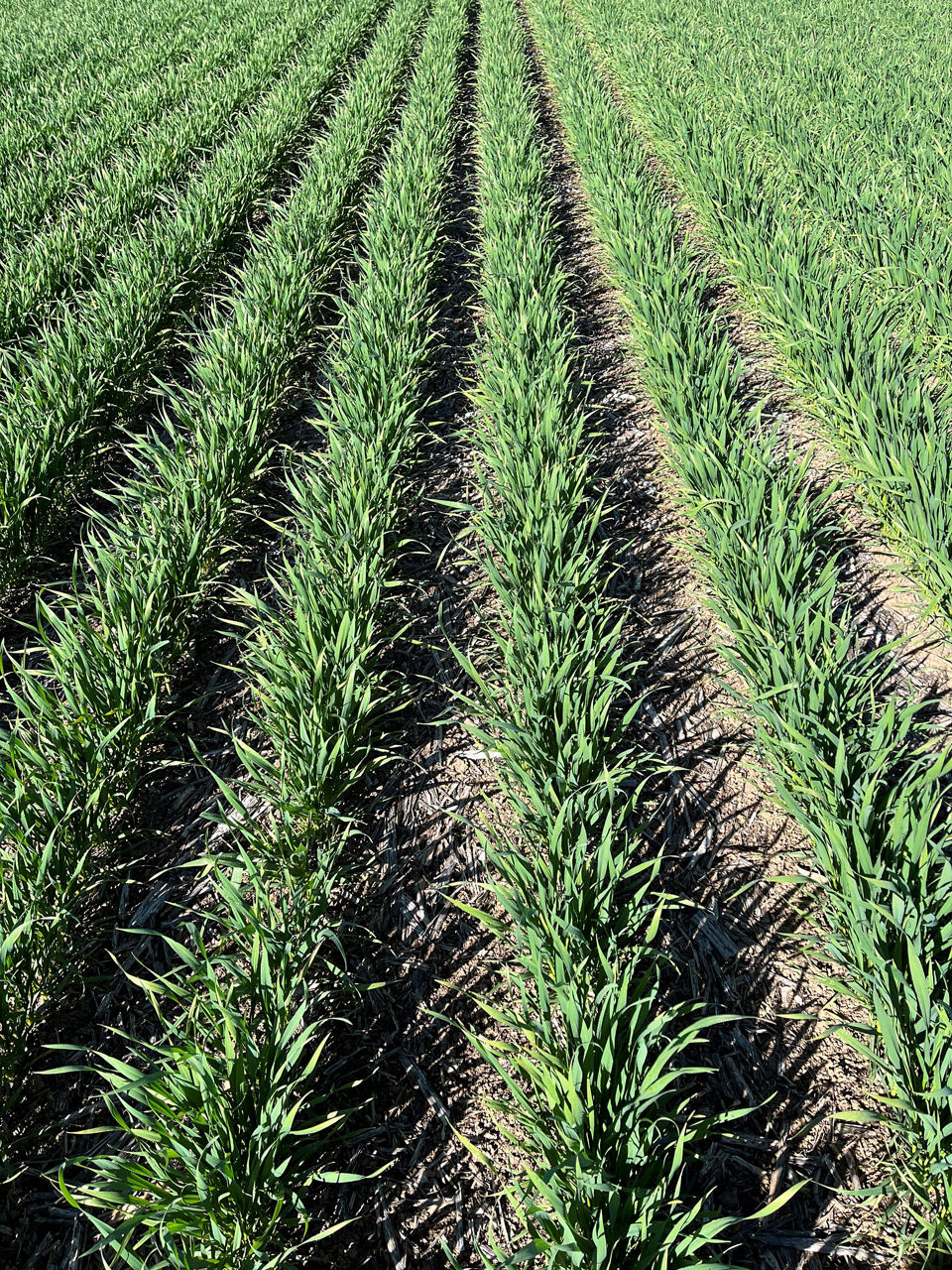
“At Kinnabulla (near Birchip in Victoria), dry conditions following crop germination saw significant suppression of ryegrass numbers due to the aclonifen effect in Mateno Complete. In other treatments, including where the pyroxasulfone had not washed-in, there was nothing else to hold back the ryegrass and brome grass.”
“In dry starts, by having the aclonifen sitting there as ryegrass shoots come through, it allows more time for the pyroxasulfone to wash-in and get to the roots – it provides that insurance for growers. Applications with pyroxasulfone and diflufenican herbicides don’t provide that level of control in dry conditions.
“Last year, we had a dry start, and then multiple, staggered germinations of ryegrass after small rainfall events. Upfront, pre-emergent herbicides didn’t work well because the rain was not enough to wash them in, and control from herbicides like prosulfocarb only lasted for about four weeks. Weeds were coming up later, and that’s where the EPE application is important.”
He said in 2024, variable conditions at sites across Victoria, favouring multiple annual ryegrass germinations, also highlighted the benefit of aclonifen in Mateno Complete.
“The additional control from aclonifen comes from that residual film on the soil surface that can be absorbed by emerging grass and broadleaf weeds alike, and it was particularly evident at the trial sites.”
“Due to paddock variation in soil moisture leading to staggered germinations of crops and weeds, perfect application timing with herbicides is not always achievable, so insurance and peace of mind from robust chemistry is invaluable.”
Paul said trial work at Elmore in Victoria in 2024 also demonstrated the benefit of adding tank mix partners with Mateno Complete, including Atlantis herbicide, which provided multiple benefits for control of annual ryegrass and wild oats. The addition of MCPA or bromoxynil herbicides to Mateno Complete also significantly reduced brassica weed pressure and brassica volunteers.
Paul said, importantly, the aclonifen was also offering a different herbicide mode of action for early season grass and broadleaf weed control, effectively taking the pressure off other commonly used herbicides.