Boost for broadleaf weed control in cereal crops
14/06/2026
Further enhanced weed control from one of Australia’s leading, versatile post-emergent herbicides is set to provide a significant boost for growers’ broadleaf weed management in cereal crops and fallows this season.
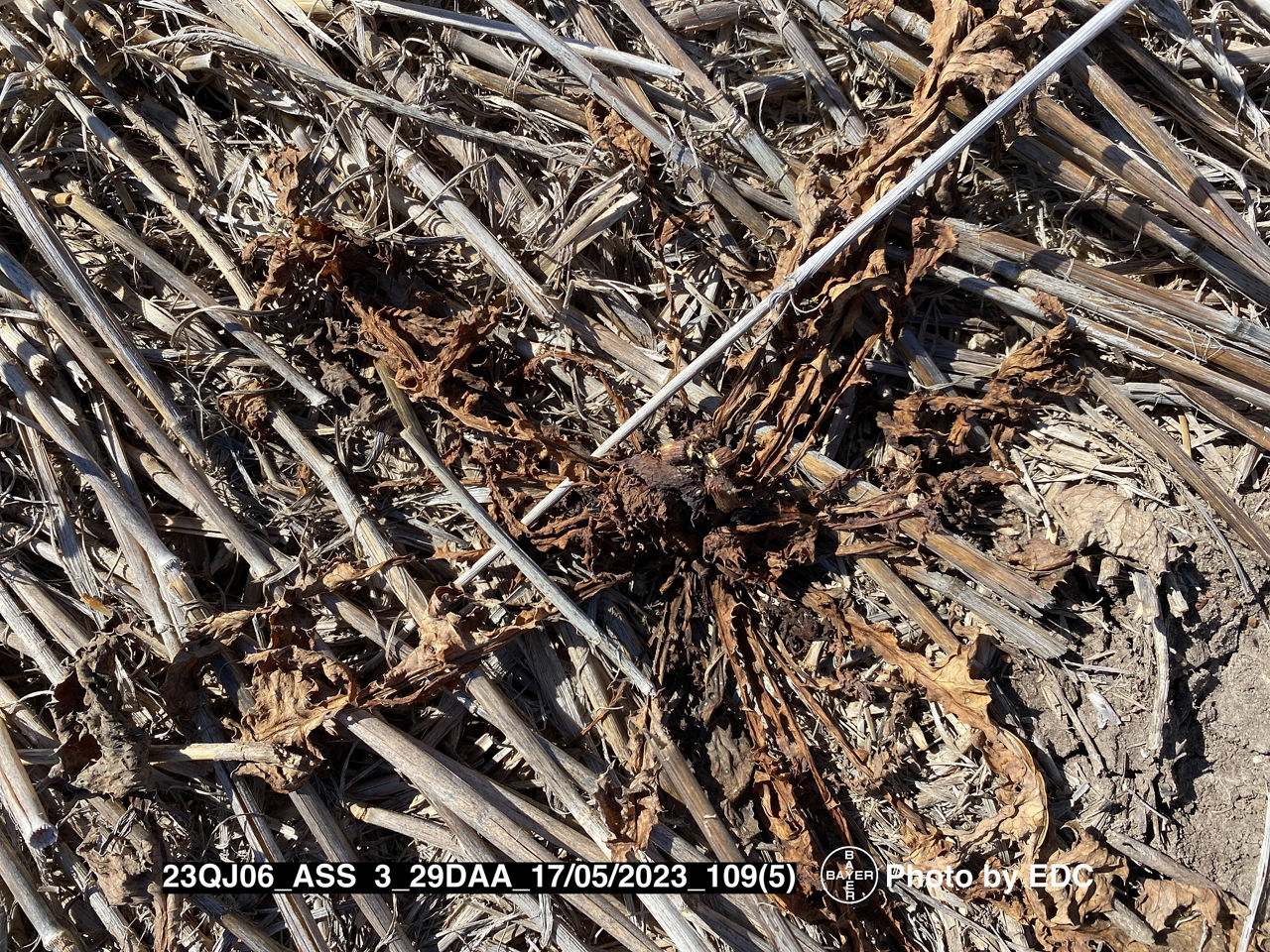
Infinity® Ultra now controls a host of additional weeds, including challenging weeds like flaxleaf fleabane, matricaria and Indian hedge mustard. It is also Bayer’s first herbicide to be registered for use with optical spot spraying technology (OSST) to target sowthistle on fallows.
Infinity Ultra comprises a complementary co-formulation of Groups 27 and 12 herbicides, pyrasulfotole and diflufenican. It has shown strong uptake by growers due to its comparable effectiveness with other standards, versatile use in tank mixes and ability to be safely applied from the two-leaf crop stage, especially in oats.
Over recent seasons, Bayer Technical Solutions Agronomist in Northern NSW and Queensland, Richard Jackman, has coordinated a number of Infinity Ultra OSST development trials at multiple sites from near Narrabri in northern New South Wales through to Toowoomba in Queensland.
The trials featured the use of SenseSpray OSST to apply Infinity Ultra with Roundup Ultra®MAX at a range of rates to assess its efficacy on sowthistle at stem elongation, prior to flowering.

Richard said the recommended rate of 240 mL of Infinity Ultra plus 3 L of Roundup UltraMAX per 150 L of water, with 0.5% Hasten, which can be applied to a maximum of 40% of the total area, proved highly effective.
“We applied it alongside label rates of industry standard OSST herbicides, including glyphosate and 2,4-D, and it was the superior treatment,” Richard said.
“Instead of a typical two-pass spot spray strategy of Roundup or 2,4-D followed by Gramoxone, growers will now be able to achieve full control of sowthistle in one pass using Infinity Ultra.
“They will use a higher Infinity Ultra rate by spot spraying, but they will achieve the control plus application savings, also without otherwise having to ‘double knock’ or use more expensive herbicides over the whole area.”
He said the latest additions to the Infinity Ultra label also included approval of a higher use rate (170 mL/ha) against wild radish, as well as control of stone crop, marshmallow, medic, and volunteer canola in cereals.
“It’s highly effective against Roundup Ready-tolerant, triazine-tolerant, Clearfield-tolerant and glufosinate-tolerant volunteer canola up to six-leaf.”
In Western Australia, Bayer Technical Solutions Agronomist Matt Willis said the additional control of matricaria by Infinity Ultra would be welcomed by cereal growers from the eastern wheatbelt through to the State’s south-eastern region.
Matt said matricaria was a prolific seed producer and, due to limited herbicide options for control, it had become more prevalent and concerning over the last decade.
He said a number of development trials over recent seasons in the eastern wheatbelt, applying Infinity Ultra to matricaria populations at label rates, had resulted in near 100% control of the challenging weed.
Matt said the new maximum label rate of 170 mL/ha for control of wild radish also would aid its management in WA’s northern agricultural region.